
This free OAR Exam study guide is designed to give candidates a clear, structured path for preparing for the exam without needing to purchase a book or paid course.
It focuses on outlining key content areas, explaining what each section tests, and suggesting effective study strategies aligned with how the exam is actually structured.
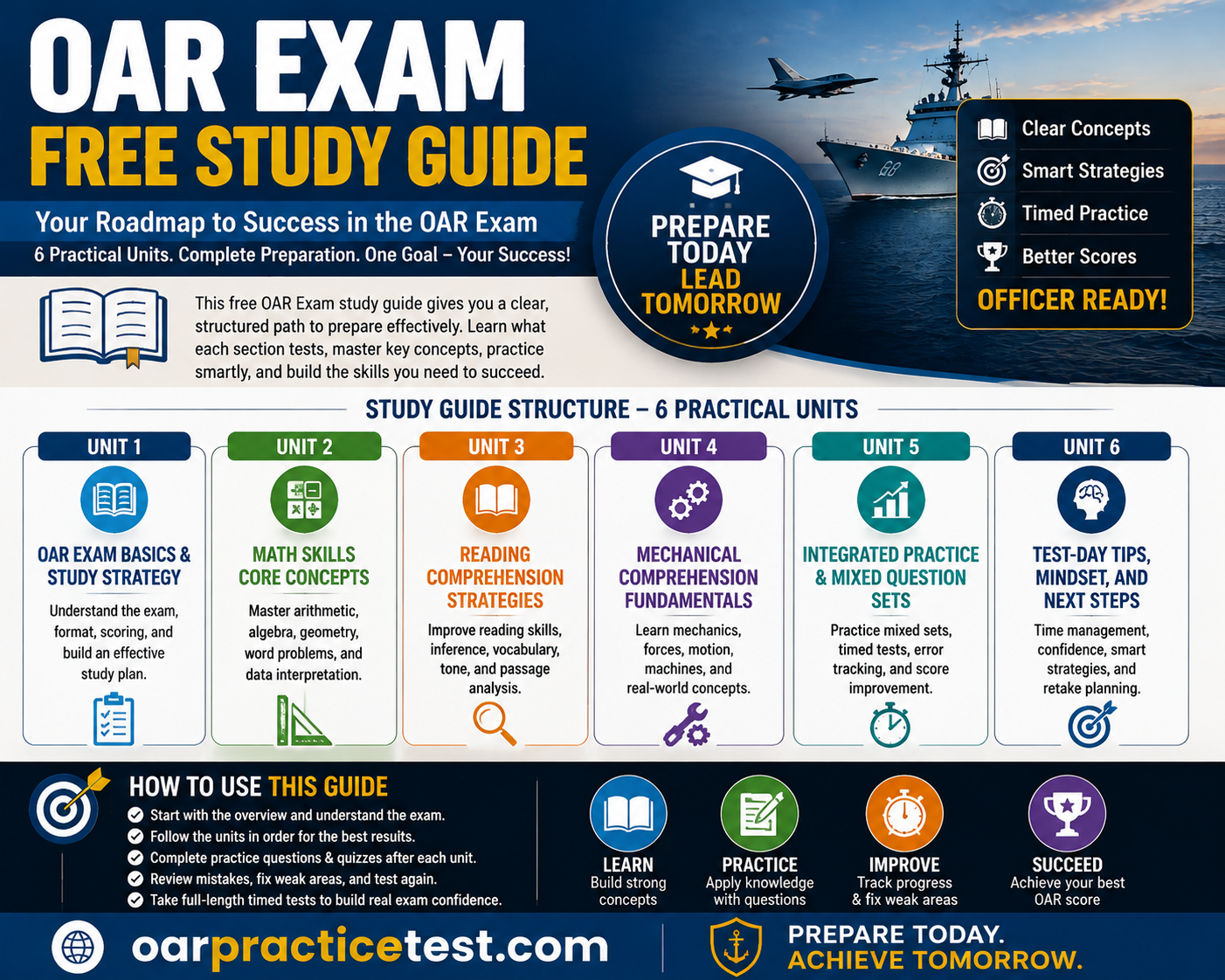
The guide is organized into practical units you can work through at your own pace, with each unit targeting one major content domain and ending with practice questions or a short quiz to check your understanding.
This mirrors the approach used by high-quality exam prep websites that divide large test blueprints into manageable, exam-aligned sections.
OAR Exam Study Guide Structure and Units
This free online study guide is divided into six OAR Exam practical units that cover all key OAR domains: Jump into any section or follow our recommended study sequence – either way, you’ll gain the knowledge and skills needed to excel in your OAR exam and Officers career!
Unit 1: OAR Exam Basics & Study Strategy Unit 2 : Math Skills Core Concepts Unit 3 : Reading Comprehension Strategies Unit 4 : Mechanical Comprehension Fundamentals Unit 5 : Integrated Practice and Mixed Question Sets Unit 6 : Test‑Day Tips, Mindset, and Next StepsThis modular structure is similar to other successful exam study guides that present the overall exam first and then deep‑dive into each content area in separate units.
How to Use This OAR Exam Study Guide
Use this guide as a roadmap rather than your only resource, referring to reputable practice tests and question banks to apply the concepts you learn.
Start with the introduction and test overview, then move systematically through each content unit instead of jumping randomly between topics.
At the end of each unit, complete the associated practice questions or quiz to identify weak areas and revisit those subtopics before moving on.
Aim to simulate exam conditions for at least one full-length practice session that combines Math Skills, Reading Comprehension, and Mechanical Comprehension questions.